
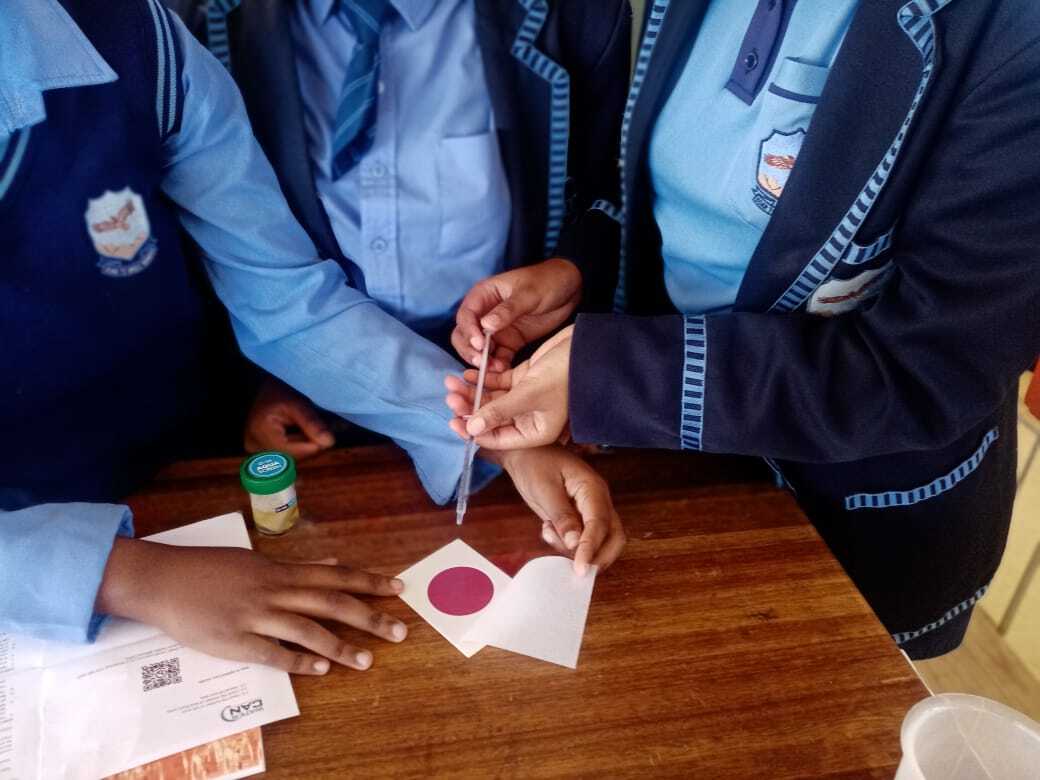
WaterCAN will host its 2026 Schools Water Testing Week from 16 to 20 March 2026, bringing together 158 schools across all nine provinces in a coordinated citizen science campaign aimed at promoting safer drinking water, stronger water awareness and greater accountability in schools.
The initiative builds on WaterCAN’s inaugural 2025 schools project, which empowered learners from 95 schools across six provinces to test their own school drinking water, identify contamination risks and raise awareness about water justice.
Nomsa Daele, project lead and WaterCAN’s Citizen Science and Training Coordinator, said the week is about giving learners practical skills while showing them that science can be a tool for public action.
“Schools are critical spaces in the fight for water justice because learners experience the reality of unsafe or unreliable water first-hand. This campaign gives young people the opportunity to test, learn and speak up using evidence from their own environment,” said Daele.
Using WaterCAN’s Citizen Science Testing Kit, participating schools will test their water and upload their findings to WaterCAN’s MapMyWater portal. The portal is a flagship WaterCAN initiative that provides real-time analysis of uploaded results while making them publicly accessible, helping build one of South Africa’s largest independent, citizen-generated water quality datasets.
Daele said 2026 marks a near doubling in the number of participating schools compared with the previous year, and that reaching all nine provinces is a sign of how important the schools project has become.
She said this milestone would not have been possible without WaterCAN’s partners, including Adopt-a-River, Enviro Vito, the Ahmed Kathrada Foundation, Rhodes University, the Nelson Mandela Bay Science Centre, the Wildlife and Environment Society of South Africa, the Cape Town Science Centre, the Institute for Water Research and the LEAP Institute.
“When learners are equipped to test water and understand what the results mean, they are not just taking part in a classroom activity. They are becoming part of a wider movement for safer water, healthier schools and more responsive governance,” she said.
Daele said access to safe water has become a central rallying point for activists across the country, with schools among the institutions most affected.
“According to the Department of Basic Education’s 2022 School Monitoring Survey, 80.7% of schools met the minimum standard for running water, which implies that nearly one in five schools did not. In many schools we have worked with, onsite water tanks contain signs of bacterial contamination, making the water unsafe to drink. Teachers, learners and their parents have a right to know whether their water is safe to drink, and this citizen science campaign helps empower that process,” she said.
Donate to WaterCAN
Across South Africa, WaterCAN’s volunteers and citizen scientists are monitoring drinking water and sanitation failures, uncovering risks, and demanding action from those responsible. We challenge polluters, call out government negligence, and stand with communities whose rights to safe water and sanitation are routinely violated. Your support keeps this watchdog work alive and powerful.
For Media Enquiries contact WaterCAN Communications Manager on Jonathan Erasmus 073 227 6075 or email media@watercan.org.za.
