
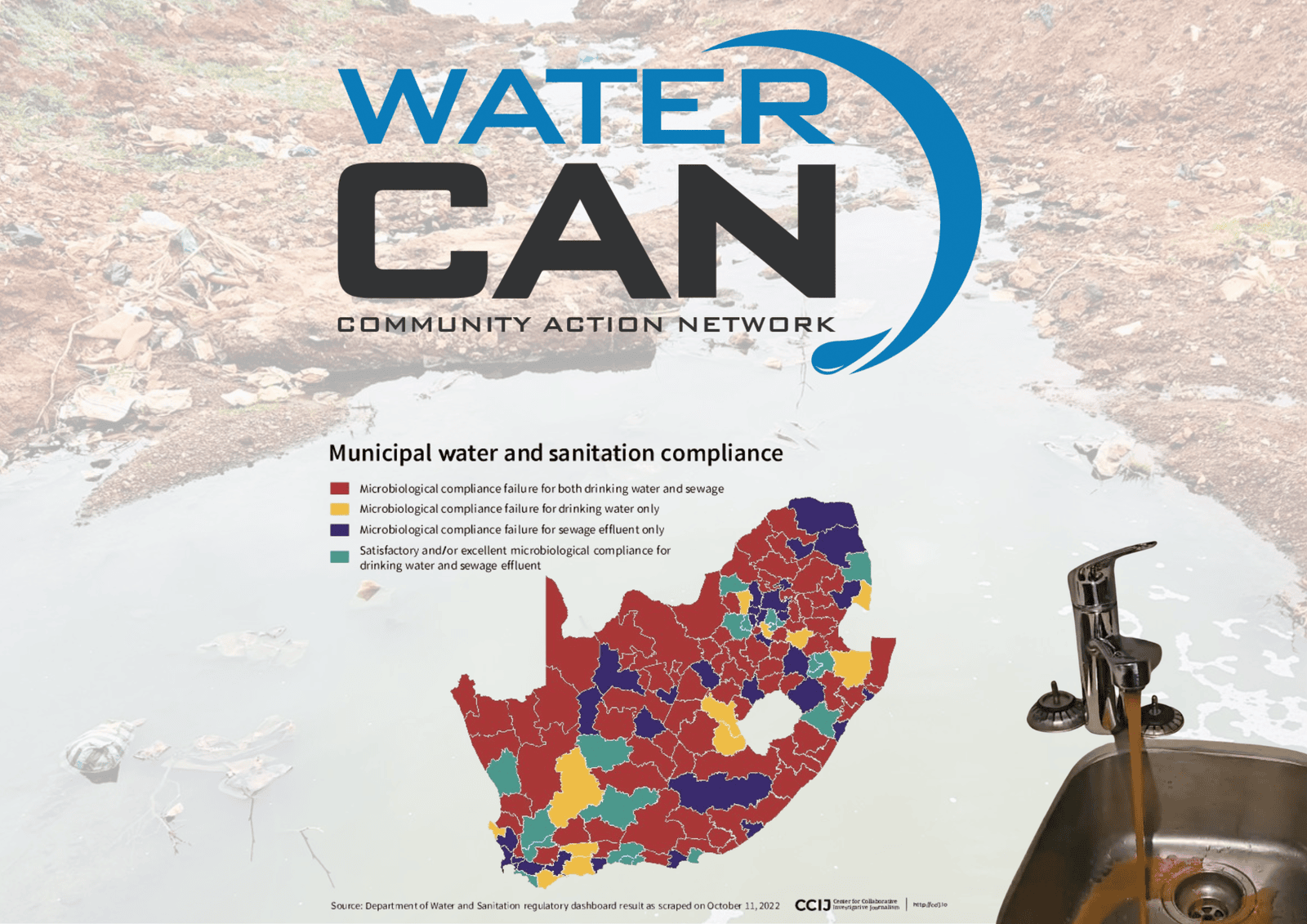
WaterCAN is deeply frustrated and alarmed by reports that municipalities have returned R1 billion in unspent Regional Bulk Infrastructure Grant funding to National Treasury over the past five years while communities across South Africa continue to endure dry taps, collapsing wastewater systems, sewage-polluted rivers and unsafe drinking water.
According to Business Day, Finance Minister Enoch Godongwana confirmed in response to a parliamentary question that municipalities returned R1bn in unused Regional Bulk Infrastructure Grant funds over five years. These funds are meant to develop, refurbish, upgrade and replace ageing bulk water and sanitation infrastructure of regional significance.
WaterCAN Executive Manager Dr Ferrial Adam said the revelation should outrage every resident who has queued for water, bought bottled water they cannot afford, lived beside a sewage spill, or watched a river die while officials claim there is no money.
“South Africans are repeatedly told there is not enough money to fix water and sanitation infrastructure. Yet here we have R1 billion that could not be spent by municipalities while communities are living through a water and sanitation crisis. That is not just poor administration. It is a betrayal,” said Adam.
“This money was meant to reach pipes, pumps, reservoirs, wastewater treatment works and communities. Instead, it went back to Treasury. In a country where rivers are being poisoned by sewage and households cannot trust what comes out of their taps, returning water infrastructure money is indefensible.”
WaterCAN said the crisis is visible in the municipalities and communities where it is active.
In eThekwini, WaterCAN and its partners have repeatedly warned that failing wastewater systems are polluting rivers and contributing to beach closures.
In Johannesburg, WaterCAN has laid criminal charges over the pollution of the Klip River system and continues to campaign against dry taps, sewage spills and water mismanagement. Residents have endured prolonged water interruptions while the city’s infrastructure crisis deepens.
In Bekkersdal and Rand West, WaterCAN has supported communities facing years of neglect, sewage spills and unsafe water, where residents often feel abandoned by the very municipalities meant to protect them.
In the Free State, we have stood shoulder to shoulder with water activists who face long periods of no water or contaminated water such as the community of Marakong Village, QwaQwa where bloodworms were found in tap water.
WaterCAN’s national citizen science work has also identified unsafe drinking-water samples in several other municipalities, including the King Cetshwayo, Gert Sibande, Waterberg, Bojanala Platinum and Pixley ka Seme.
“These are not abstract numbers on a Treasury spreadsheet,” said Adam. “Every rand returned represents delayed repairs, failed projects, untreated sewage, unsafe water, and communities left to carry the health and financial burden of municipal failure.”
WaterCAN said it was particularly alarming that the largest returned amounts were reported from provinces already facing serious water and sanitation challenges, including North West, Eastern Cape and the Free State.
“Municipalities cannot keep blaming ageing infrastructure while failing to spend the money allocated to fix that infrastructure,” said Adam. “The public deserves to know which municipalities returned funds, which projects failed, who was responsible, and what consequences followed.”
WaterCAN is calling for urgent action from National Treasury, the Department of Water and Sanitation, COGTA, Parliament and affected municipalities.
The organisation wants the full list of municipalities that returned Regional Bulk Infrastructure Grant funds to be made public, including the amounts returned, the projects affected, the reasons for underspending, and the officials responsible for implementation failures.
WaterCAN is also calling for monthly public reporting on water and sanitation infrastructure grants, including project milestones, spending progress, delays, contractor performance and corrective action.
“Transparency must become non-negotiable,” said Adam. “Communities cannot be expected to live with failing water systems while grant performance is hidden in reports and parliamentary replies. Residents have a right to know whether money meant for their water infrastructure is being spent, delayed, mismanaged or returned.”
WaterCAN said consequence management must also move beyond statements.
“This crisis demands urgency. South Africa does not have the luxury of another five years of returned grants, broken pipes and poisoned rivers,” said Adam.
Donate to WaterCAN
Across South Africa, WaterCAN’s volunteers and citizen scientists are monitoring drinking water and sanitation failures, uncovering risks, and demanding action from those responsible. We challenge polluters, call out government negligence, and stand with communities whose rights to safe water and sanitation are routinely violated. Your support keeps this watchdog work alive and powerful.
For Media Enquiries please contact WaterCAN Communications Manager on Jonathan Erasmus 068 923 6600 or email media@watercan.org.za
