
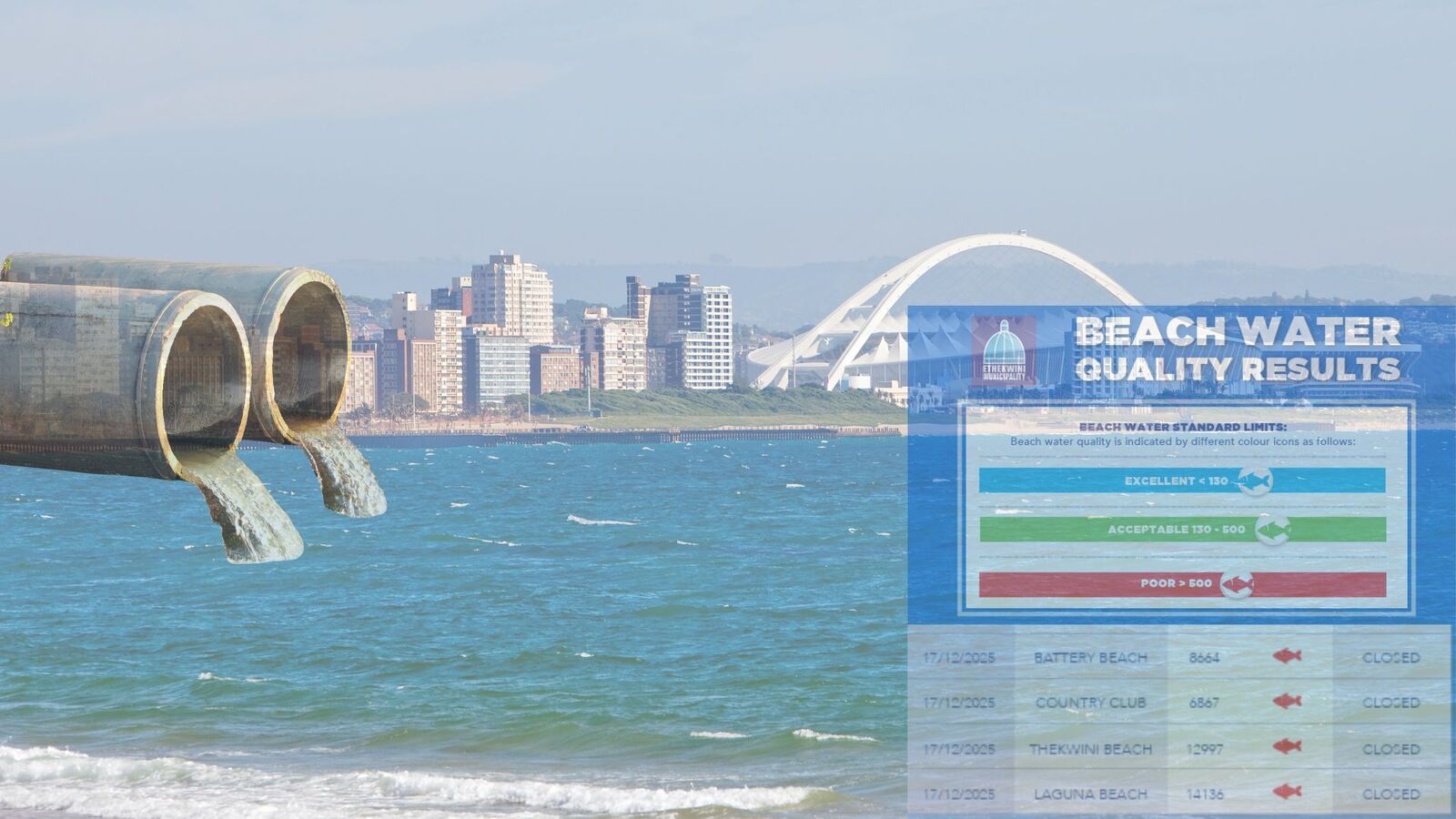
Durban beaches will likely continue to face sporadic closures until the fundamental problem - repairing and restoring the city’s failing wastewater treatment network - is properly resolved, says WaterCAN.
WaterCAN, along with its partners Save Our Rivers and Sea from Sewage (SORFS) and Adopt-a-River, has conducted a series of tests in La Lucia, Battery Beach and the Umgeni River since 21 November using WaterCAN Citizen Science Test Kits.
“Our tests flagged every site as unsafe - and E. coli was repeatedly at the centre of the problem,” said Jonathan Erasmus, WaterCAN’s communication manager.
Erasmus said the pattern of closures was being driven less by “more” E. coli in Durban’s rivers, and more by factors beyond anyone’s immediate control, such as seasonal winds and ocean currents, which influence where polluted water ends up along the coastline.
“Millions of litres of untreated wastewater reach the ocean through multiple outlets every day, and the public is left exposed when conditions drive it onto the beachfront,” Erasmus said.
Erasmus said he was aware of various families who had been victims of alleged E. coli-related illnesses.
In addition, the city’s Beach Water Quality Results released on 19 December 2025 mirror the trend identified by WaterCAN and its partners.
According to the city’s recent beach closure data (as of 17 December), E. coli levels were:
8,664 CFU/100 ml at Battery Beach
6,867 CFU/100 ml at Country Club Beach
12,997 CFU/100 ml at Thekwini Beach
14,136 CFU/100 ml at Laguna Beach
According to the city's water quality standard for beaches, E.coli levels above 500CFU is considered "poor" and the beaches should be closed.
While many of the beaches were opened days later after closure, Erasmus said this is "just luck" with sewage related closures now a way of life in the coastal city.
Erasmus said the city’s own River Quality Reports — compiled from monthly river-quality tests — indicate exceptionally high E. coli levels across the system and entering the ocean since 2020. Until recently, these reports were available on the municipality’s website going back five years, but are no longer accessible. At present, the only river-quality report available is for September 2025.
“The city’s September river report suggests the treatment network is failing across the full north–south corridor. The volume of sewage entering the ocean is enormous. That is the real crisis,” Erasmus said.
The city's river quality report shows that every single major river system in the city reflected E.coli readings exceeding 10,000 CFU/100 ml in parts of the system. When it comes to river systems, the city's quality standard is different to beaches with anything in excess of 10000 CFU classified as "critical" while 400 CFU and below is deemed "ideal".
“The warning signs have been in the data for years. When that evidence doesn’t translate into urgent repairs, the public pays the price,” Erasmus said.
WaterCAN said it believes the eThekwini Municipal leadership has lost control of its wastewater treatment network, and called for urgent intervention and consequences for those in charge, to protect public health.
“There must be clear accountability at leadership level for allowing conditions that place hundreds of thousands of people at risk of bacterial exposure,” Erasmus said.
Donate to WaterCAN
Across South Africa, WaterCAN’s volunteers and citizen scientists are monitoring drinking water and sanitation failures, uncovering risks, and demanding action from those responsible. We challenge polluters, call out government negligence, and stand with communities whose rights to safe water and sanitation are routinely violated. Your support keeps this watchdog work alive and powerful.
For Media Enquiries contact WaterCAN Communications Manager on Jonathan Erasmus 073 227 6075 or email media@watercan.org.za.
