
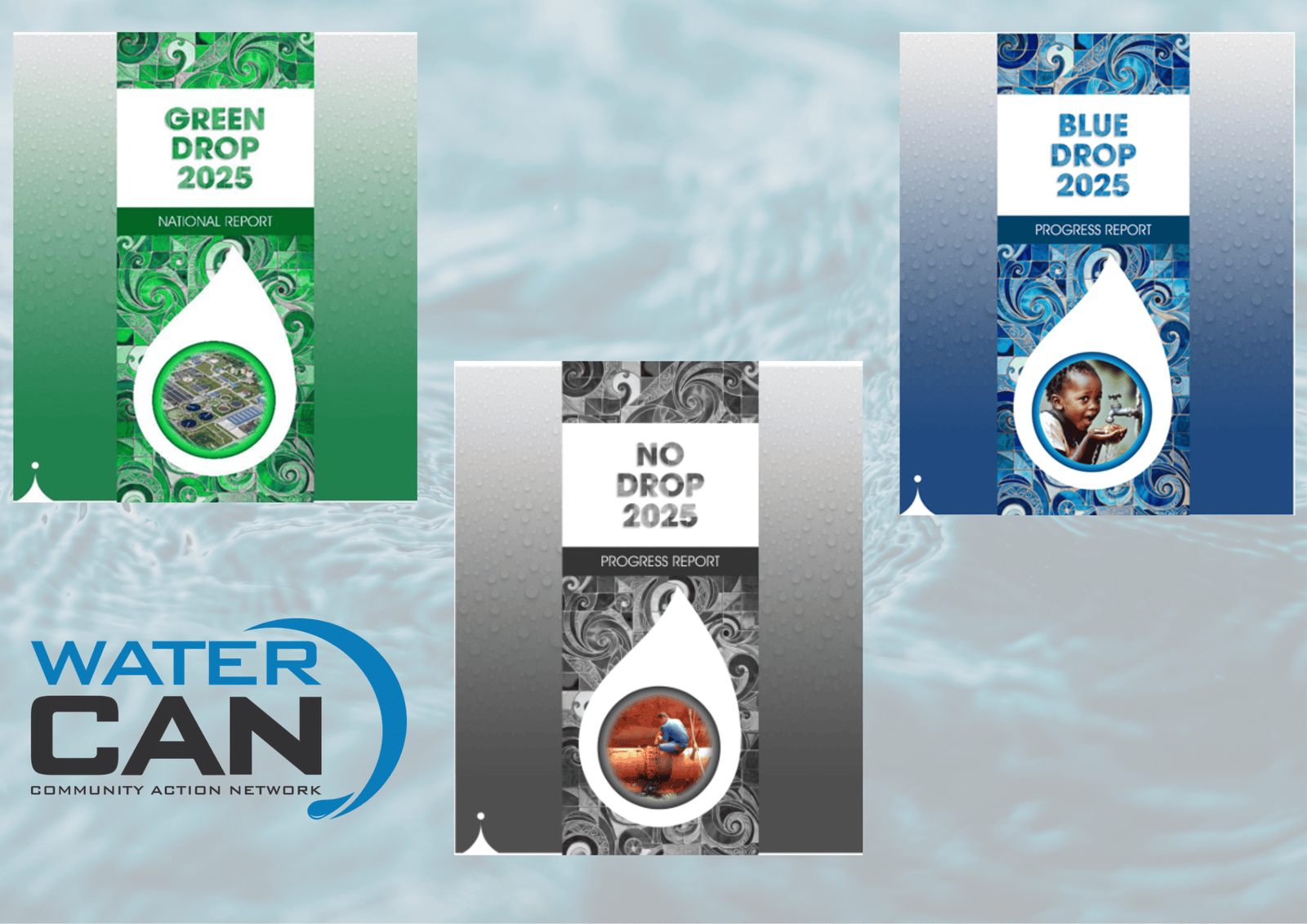
WaterCAN says the latest Green Drop Report, Blue Drop Progress Assessment findings confirm a deepening water and wastewater crisis in South Africa and reflect a continued failure to act despite years of warnings.
Green Drop Report
South Africa’s wastewater treatment performance has declined, with only 16 systems (1.6%) achieving Green Drop Certification in 2024, down from 23 (2.3%) in 2021. At the same time, nearly half of all municipal wastewater systems assessed - 396 out of 848 - are now in a critical state.
“These results confirm what communities have been saying for years. The crisis is not new - what is new is the continued failure to act. Reports are being released, but where is the accountability?” said Dr Ferrial Adam, Executive Director of WaterCAN.
The report highlights systemic failures, including large volumes of wastewater not reaching treatment works, leading to spills, environmental contamination and direct public health risks.
Provincial disparities remain severe, with the Northern Cape (87%) and Free State (85%) recording the highest proportion of systems in critical condition. Even Gauteng and the Western Cape are showing signs of decline.
“We are moving backwards, and that should alarm every South African. Fewer high-performing systems and more in critical condition is not a trend - it is a collapse. We cannot celebrate mediocrity while our rivers are being turned into sewage channels. A slight improvement in scores means nothing if wastewater is still spilling into communities and making people sick,” said Adam
Blue Drop Progress Report
The Blue Drop findings on drinking water quality also require closer scrutiny. While 62% of water systems are classified as low risk, this masks a far more fragile reality: 38% of systems fall outside this category, with nearly 1 in 5 already under strain and 185 systems in high or critical risk. Of these, 79 are in outright crisis, exposing communities to unsafe or unreliable drinking water.
“This is not stability - it is managed decline. We are tolerating a system where more than a third of water supply systems pose a real risk, and nearly 200 require urgent intervention,” said Adam.
No Drop Progress Report
Non-revenue water remains alarmingly high at around 47%, with nearly half of treated water lost through leaks, poor infrastructure and weak management, compounding water insecurity.
Across all three reports, recurring failures include ageing infrastructure, lack of maintenance, skills shortages and weak accountability - pointing to a systemic breakdown in water governance. “There has been more than enough evidence, more than enough warnings, and more than enough time. The real failure here is not technical - it is political,” said Adam.
WaterCAN is calling for urgent turnaround plans to be actioned, enforced accountability and sustained investment in maintenance, operations and professional capacity.
“Until there are real consequences for failure, we will continue to see the same pattern: reports, regression, and no action,” said Adam.
Donate to WaterCAN
Across South Africa, WaterCAN’s volunteers and citizen scientists are monitoring drinking water and sanitation failures, uncovering risks, and demanding action from those responsible. We challenge polluters, call out government negligence, and stand with communities whose rights to safe water and sanitation are routinely violated. Your support keeps this watchdog work alive and powerful.
For Media Enquiries please contact WaterCAN Communications Manager on Jonathan Erasmus 073 227 6075 or email media@watercan.org.za.
