
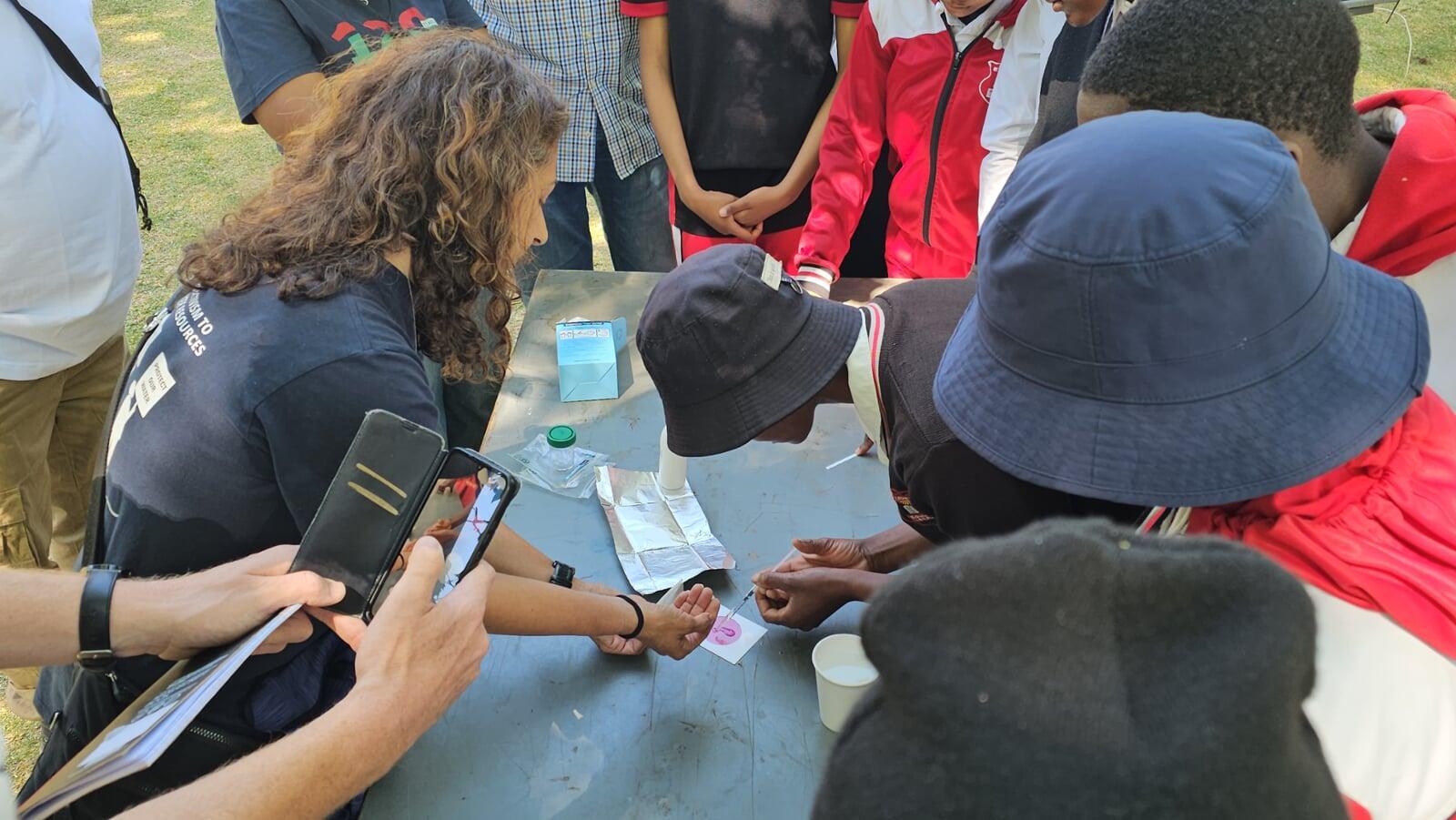
The Annual WaterCAN Citizen Science Water Testing Week held in September has confirmed that unsafe water is not an isolated rural problem but a widespread national risk affecting communities across all nine provinces.
The most alarming results come from drinking-water sources that should be safe at the point of use.
“South Africans should not have to second-guess whether the water from their taps and tanks is safe to drink,” said Ms Nomsa Daele, Citizen Science and Training Coordinator of WaterCAN.
“When our community testers, are picking up bacteria in household drinking water in eight municipalities, it is deeply concerning. This is just a sample by committed volunteers. The true extent of this crisis is likely much worse,” said Daele.
Using the WaterCAN Citizen Science Test Kits, over 500 kits were distributed to community volunteers who sampled multiple water sources comprising of taps, household storage tanks, rivers, dams and other local supplies – across all nine provinces.
Just under a third of the kit samples distributed, 132, were uploaded to WaterCAN's Map My Water Platform.
Of that, a high-level view of the results revealed that five taps were found to be unsafe, along with two water tanks and 53 rivers.
Daele stressed the unsafe drinking water samples tested for Coliform only while high levels of E.Coli were found in the river systems tested.
In most provinces, the majority of tested sources, sitting at 66%, were unsafe for human consumption, with contamination patterns pointing strongly to poorly treated sewage and failing wastewater systems rather than isolated incidents.
“In Limpopo, for example, all four sampled sources – a tap, a river and two other domestic sources in Waterberg and Mopani – were unsafe,” said Daele.
WaterCAN identified at least eight municipalities where drinking-water sources tested positive for total coliforms. These are:
- City of Johannesburg Metropolitan Municipality (Gauteng) – unsafe JoJo tank water, plus a warning-level JoJo tank
- Sedibeng District Municipality (Gauteng) – unsafe tap water
- King Cetshwayo District Municipality (KwaZulu-Natal) – unsafe tap water
- Gert Sibande District Municipality (Mpumalanga) – unsafe tap water and other unsafe domestic sources
- Waterberg District Municipality (Limpopo) – unsafe tap and other domestic sources
- Mopani District Municipality (Limpopo) – unsafe other domestic water source
- Bojanala Platinum District Municipality (North West) – unsafe tap water
- Pixley ka Seme District Municipality (Northern Cape) – unsafe JoJo tank water
According to Professor Anja du Plessis, a water management expert and Associate Professor at Unisa who analysed the data, clear water quality patterns and trends can be identified across the country, in all provinces.
“The data shows that no province is spared, with almost all tested surface water resources having unsafe water quality, supporting what we have been warning about for decades - our rivers and dams have become open sewers, contaminated with chemical pollutants and sewage,” said du Plessis.
Du Plessis said what is of concern is that is that the poor water quality is not a once-off pollution event.
“We are seeing the same pattern across provinces: sewage and wastewater consistently leaking into our rivers and dams, phosphate ‘hotspots’, and even in some cases contaminated taps and tanks, at the point where families drink and cook. Until there is routine testing, public reporting and real consequences for polluters, residents will continue to carry the risk.”
“The more we test, the more informed decisions can be made and we can start to hold those who pollute our already scarce water resources to account as a collective,” said du Plessis.
WaterCAN is calling for urgent municipal and provincial interventions in affected municipalities; routine, transparent water quality monitoring; emergency safe water provision where domestic sources are unsafe; and sustained community awareness so residents understand that rivers, dams and any tap or tank testing positive for faecal bacteria cannot be considered safe for drinking.
Note: This statement was updated on 18 December 2025. In the original statement we mistakenly alluded to the unsafe taps having E.coli present. There was only coliform present. We apologise for any confusion caused.
Donate to WaterCAN
If you require any images for publication please select here.
For Media Enquiries contact WaterCAN Communications Manager on Jonathan Erasmus 073 227 6075 or email media@watercan.org.za.
