
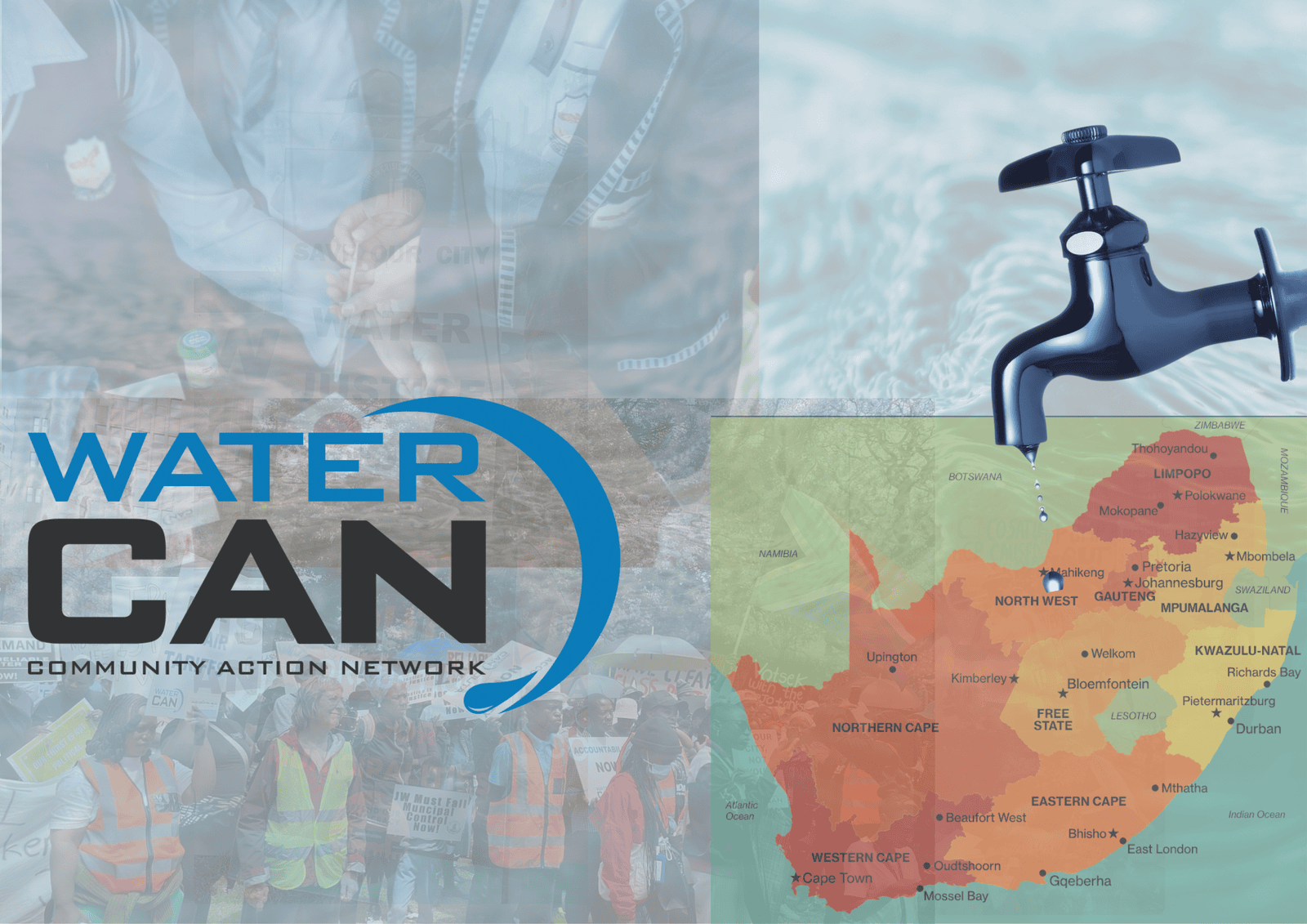
South Africa’s 2026 State of the Province Addresses showed marked differences in how premiers and provincial governments are prioritising water and sanitation, with provinces such as Gauteng, Mpumalanga, North West, Eastern Cape and Free State giving the issues clear space in their speeches, while KwaZulu-Natal and, to a lesser extent, the Western Cape dealt with them more indirectly or through broader infrastructure language.
The nine provinces held their state of the province addresses between 20 February and 5 March.
The speeches differed in what they set out for 2026/27 and beyond specifically in relation to water and sanitation. Some provinces highlighted projects already completed, others pointed to schemes under construction, and several outlined longer-term programmes still in planning.
Taken together, the speeches suggest Gauteng, Mpumalanga, North West, Eastern Cape and Free State gave water and sanitation the clearest operational treatment, because they linked the issues to specific problems, projects, budgets, implementation stages or expected service outcomes. Northern Cape’s approach was more aggregate, focused on spending and access levels, while the Western Cape framed water mainly through resilience and new sources of supply. KwaZulu-Natal was the weakest on the issue in the speech itself, with no comparable province-wide programme set out.
In the Eastern Cape, Premier Oscar Mabuyane placed water near the centre of his infrastructure case, saying the province is implementing 13 major bulk water supply projects worth R9.1 billion, due for completion over the next two years, with another 12 projects in planning. He also used access figures to argue that service reach has improved, saying 1.5 million of the province’s 1.8 million households have tapped water and 1.7 million have access to sanitation. The outcome set out for 2026/27 and beyond is continued expansion of bulk supply and longer-term water security, rather than a claim that the programme is already finished.
In the Free State, Premier MaQueen Letsoha-Mathae drew a clearer line between work already done and work still to come. She said the province had completed the refurbishment of the Fika Patso Water Treatment Works in Qwaqwa, repaired and replaced ageing pipelines at Tlholong Extension 4 in Kestell, replaced nearly 33.8km of the Welbedacht Pipeline to improve supply to Mangaung, and refurbished the Brandfort Wastewater Treatment Works. For 2026/27 and beyond, she said the Department of Water and Sanitation would implement 51 water and sanitation infrastructure projects across the province, while provincial support to municipalities would continue around wastewater treatment and bucket eradication.
Gauteng gave one of the most immediate and detailed water accounts, driven by the January 2026 supply disruption. Premier Panyaza Lesufi said a R760 million phased upgrade in Johannesburg was under way, including a new Brixton reservoir and tower, an emergency boosting station and a 5km pipeline due by year-end, while Midrand was getting a new 20 million litre storage facility, matched by a private-sector donation of 10 million litres. On sanitation, Gauteng stood out for focusing on informal settlements, saying 620 stands in Nooitgedacht had been connected to a solar-powered on-site treatment system, more than 1,000 yard-based toilet units had been commissioned in Soul City, and more than 200 units were already in use in Bophelong, with further expansion planned.
KwaZulu-Natal, by contrast, did not make water and sanitation a major standalone theme. Premier Thami Ntuli referred to them mainly in passing, including a line that rural development is no longer only about roads, water and electricity, and in a health infrastructure section that mentioned boreholes, sewer upgrades and other maintenance works at clinics. Based on the speech itself, the province’s stated outcome for 2026/27 is continued facility improvement and broader local government support, rather than a clearly defined province-wide water and sanitation programme with named bulk projects, budgets or measurable rollout targets.
Limpopo framed water more through local government and industrial infrastructure. Premier Phophi Ramathuba said 2026 is the “year of fixing local government”, explicitly tying that to improving basic services including water and sanitation. In the Musina-Makhado Special Economic Zone, she said phase one of the water supply system was under way, with the bulk pipeline contractor appointed, 15 new boreholes included, a 6 mega-litre purification plant being built, and reservoir and elevated tank contracts due within four months. She said the water works should be completed in 25 months and meet demand for 10 years, while wastewater and other services would follow. The outcome presented for 2026/27 and beyond is therefore staged infrastructure expansion rather than a near-term province-wide completion claim.
Mpumalanga was among the most detailed on both water and sanitation. Premier Mandla Ndlovu said municipalities remain responsible for services such as water and sanitation, but that the province had decided to intervene where capacity and maintenance failures were holding back delivery. He said the Loskop Bulk Water Scheme was 90% complete and would provide 20 megalitres a day to Thembisile Hani once finished, while several other projects were under way, including the Gabosch Dam and bulk pipeline, a package plant and pipeline in Sheepmoor, and the Lekwa sewer spillages and water access programme. He also said the Delmas Wastewater Treatment Works upgrade was 68% complete, the Driekoppies Regional Bulk Water Scheme upgrade was partly complete, and the provincial bulk water and sanitation master plan had been completed. The province also used the speech to say private-sector commitments had been secured through a water and sanitation conference, with government promising follow-up.
Northern Cape put more emphasis on cumulative spending, household access and municipal obligations than on a long list of named schemes. Premier Zamani Saul said the province had invested just over R4.29 billion in water and sanitation since 2016, including more than R3.77 billion for water and R524 million for sanitation. He said more than 95% of households have access to potable water and reliable sanitation, and that investment in the current financial year was almost R983.7 million, with expenditure just over R601.7 million. For the period ahead, Saul said municipalities would be expected to fix leaks, strengthen in-house capacity and improve basic services, indicating a continued infrastructure and maintenance push rather than a single flagship rollout for 2026/27.
North West placed water and sanitation firmly inside its local government recovery agenda. Premier Lazarus Mokgosi said the province was already making progress with various water projects, had introduced a contractor in Seweding village in Mahikeng to deal with sewer spillages, and would start phase two of the upgraded Rustenburg Bulk Water Supply Scheme the following month to improve services to more than 140,000 residents in Bethanie, Modikoe, Berseba and Makolokwe. He said close to R300 million had already been spent on water and sanitation projects in several municipalities and villages, and that another R1.9 billion had been set aside for ongoing bulk water supply projects in Madibeng, Ratlou, Mahikeng and Ramotshere Moiloa. The expected outcome for 2026/27 and beyond is further bulk-water rollout and continued intervention on sewer failures.
In the Western Cape, Premier Alan Winde approached the issue through water resilience and augmentation rather than a broader sanitation drive. He said the raising of the Clanwilliam Dam wall was well under way and would add 69.5 million cubic metres of water a year once complete, while the province was helping municipalities with pipeline upgrades in Overstrand, reservoir construction in Saldanha Bay and higher treatment capacity in Voelvlei and Swartland. Winde also said Breed Valley Municipality had built three new reservoirs in Worcester, and that Cape Town was preparing to issue tenders for a reuse water plant and desalination site. The outcome projected for 2026/27 and beyond is continued resilience investment and new supply augmentation, while sanitation did not feature strongly as a separate theme in the speech.
NOTE TO MEDIA: The above is a summary of the various SOPAs to provide an overview of what was said in relation to water and sanitation. If you require a comment specific to a province please let us know and we will assist. Media contact details are below.
Donate to WaterCAN
Across South Africa, WaterCAN’s volunteers and citizen scientists are monitoring drinking water and sanitation failures, uncovering risks, and demanding action from those responsible. We challenge polluters, call out government negligence, and stand with communities whose rights to safe water and sanitation are routinely violated. Your support keeps this watchdog work alive and powerful.
For Media Enquiries contact WaterCAN Communications Manager on Jonathan Erasmus 073 227 6075 or email media@watercan.org.za.
