
World Water Week 23-27 August
by Dr Ferrial Adam
Dr Ferrial Adam is the Executive Director of WaterCAN and a leading advocate for water justice and accountable governance in South Africa.
Does the National Water Action Plan confront the real causes of South Africa's water crisis, and does it create the conditions for implementation?
Every National Action Plan begins with a diagnosis.
The President's National Water Action Plan is significant because it finally acknowledges that South Africa is facing a national water crisis.
For years, ministers and senior officials dismissed the notion of a national crisis, arguing instead that the country's water challenges were confined to poorly performing municipalities, population growth or high demand from consumers.
That position is no longer tenable. By placing water and sanitation at the centre of the national agenda, the President has recognised that the scale and complexity of the challenge demand national leadership and coordinated action.
President Cyril Ramaphosa released the National Water Action Plan on 23 July 2026. The plan is to be managed by National Water Crisis Committee, known as Watercom and its membership includes the Department of Water and Sanitation, National Treasury, the departments responsible for cooperative governance, human settlements, public works and the environment, as well as the South African Police Service. The South African Local Government Association is also included. These institutions are essential. But they are all part of, or closely connected to, the government system responsible for delivering water.
The Action Plan comes at a critical moment. Almost half of drinking water systems fail to meet quality standards. More than 80% of wastewater treatment works are performing poorly, while almost half of treated water never reaches consumers because of leaks, theft and non-billed water. We have at least 2688 unserved communities which means these areas do not have any potable water infrastructure. The high levels of pollution from industry, mining and government has left our river ecosystems struggling to survive. These are not isolated service delivery failures. They are symptoms of a system under severe strain.
The National Water Action Plan sets out short medium and long term interventions to ensure a reliable supply of water to all. It is built around five main areas: responding to water interruptions in priority areas; reforming municipal institutions and financing; unlocking infrastructure investment, including private investment; strengthening legal and regulatory mechanisms; and tackling corruption and criminal activity in the water sector. Some of the key interventions include ring-fencing of water and sanitation budgets in municipalities and reduce non-revenue water by 2030. These are all important interventions and should not be dismissed.
Yet while the National Water Action Plan elevates the crisis to the national level, its proposed response remains rooted in the same thinking that has characterised government policy for years. The Action Plan continues to treat water primarily as an engineering, management and service delivery issue rather than as a systemic national crisis driven by the interaction of failing institutions, financial instability, corruption, deteriorating infrastructure, pollution, degraded rivers, wetlands and catchments, climate change and deep social inequality. These forces do not operate in isolation. They reinforce one another, creating what can only be described as a water polycrisis.
The Plan also reflects a narrow conception of water security. It focuses predominantly on engineered infrastructure while giving relatively little attention to ecological infrastructure. Yet healthy rivers, wetlands, aquifers and catchments are not environmental luxuries. They are part of the water system itself.
Degrading them increases treatment costs, reduces water availability and weakens the resilience of built infrastructure. Lasting water security depends on protecting both natural and engineered systems.
The weakness of the Action Plan is not necessarily what it includes, but what it excludes and what it assumes. It assumes that if water and sanitation services are taken away from failing municipalities (of which there are hundreds), leveraging private sector investment, infrastructure is repaired, corruption is reduced and investment increases, then the crisis will improve. The challenge is not simply to fix individual failures but to change the system that continues to reproduce them. Without confronting those structural drivers of South Africa's water polycrisis, even well-designed interventions risk delivering only incremental improvements while the underlying crisis persists.
South Africa's water crisis is not a crisis of diagnosis. We do not suffer from a shortage of plans, strategies or policy frameworks. We suffer from a failure to create the institutional, financial and governance conditions that make implementation possible. The National Water Action Plan contains many important and long-overdue technical interventions. But South Africa's water polycrisis cannot be implemented away through projects alone. It requires capable institutions, accountable leadership, sustainable financing and adaptive forms of governance that bring together the state, the private sector and civil society. Ultimately, the Plan should not be judged by the number of interventions it contains, but by whether it creates these conditions for implementation. Therefore, implementation itself requires a different governance model. That model is co-governance.
If the crisis is systemic, implementation requires a different governance model. Implementation cannot rest on government alone, nor can responsibility simply be outsourced to the private sector. It requires a model of co-governance in which the state, business and civil society each play distinct but complementary roles. We therefore need three mutually reinforcing pillars:
An accountable state that fulfils its constitutional obligations and invests in capable institutions.
A responsible private sector that recognises water as a shared public resource rather than a profit centre, complies with environmental and water laws, prevents pollution, avoids over abstraction, manages water efficiently and contributes to resilient water systems.
An empowered civil society that generates evidence through citizen science, participates in decision-making, and holds both government and business accountable.
The Presidency says the National Water Action Plan was informed by extensive consultation across national, provincial and local government and with organisations such as SALGA.
Yet consultation is not the same as co-governance. It becomes a case of government speaking into an echo chamber.
This reactive approach also overlooks an important reality. South Africa's water crisis did not emerge overnight. It has been building for decades, and many civil society organisations and affected communities have long recognised the warning signs. Long before the establishment of Watercom, they were working to strengthen water stewardship from the ground up through citizen science, community monitoring, advocacy and local action. In doing so, they have developed a deep understanding of the complexity of South Africa's water polycrisis, including the growing risks posed by climate change. This experience should not be treated as peripheral to implementation. It is an essential resource for building genuine co governance of South Africa's water commons.
The absence of a clearly defined role for civil society and affected communities in the Action Plan is a significant weakness. Civil society cannot be included through occasional consultation after priorities, projects and budgets have already been decided. Too often, public participation amounts to little more than a procedural tick-box exercise, taking place after priorities, projects and budgets have already been decided.
Civil society has been at the forefront of this campaign, and yet, when it matters most, we are excluded. The people experiencing water failures often know about them before the responsible institutions acknowledge them.
Across South Africa, organisations such as WaterCAN are demonstrating how citizen science can strengthen water governance. Communities and citizen scientists are trained to test water, document failures, map results and use evidence to engage officials and demand corrective action. Citizen-generated information can help identify risks, verify official reporting and expose the gap between what institutions say has been delivered and what residents experience.
A credible national plan should therefore give civil society formal representation in Watercom’s advisory and monitoring structures. It should create channels through which communities can submit evidence and receive a response. Civil-society organisations should have access to implementation reports, project timelines, water-quality information and financial performance data.
This is not a new idea. In many parts of the world co-governance models are being used to manage and monitor water and sanitation. Countries such as Brazil and Indonesia demonstrate that durable water reform depends on more than infrastructure investment. Communities participate in planning, monitoring and managing water systems, while governments provide finance, technical support and oversight. These examples show that co-governance is not an alternative to the state but a way of strengthening it and strengthening democracy.
The President deserves credit for recognising that South Africa faces a national water crisis. That acknowledgement matters. But recognition is only the beginning. The National Water Action Plan should ultimately be judged not by the number of interventions it contains, but by whether it creates the conditions for implementation through co-governance.
South Africa's water polycrisis cannot be resolved through state action alone, nor can it be outsourced to the private sector. The role of the private sector must also be clearly understood. Greater private sector participation should not be equated with turning water and sanitation into profit making enterprises.
Water is a constitutional right and a shared public resource. The responsibility of business is to operate within the country's legal and policy framework, prevent pollution, avoid over abstraction, improve water efficiency and contribute to the long-term sustainability of the catchments and water systems on which society depends.
The scale and complexity of the crisis demands a new social compact: an accountable state, a responsible and accountable private sector, and an empowered civil society, each fulfilling distinct but complementary roles in protecting, managing and governing our water resources. That is how we build a water-secure South Africa.
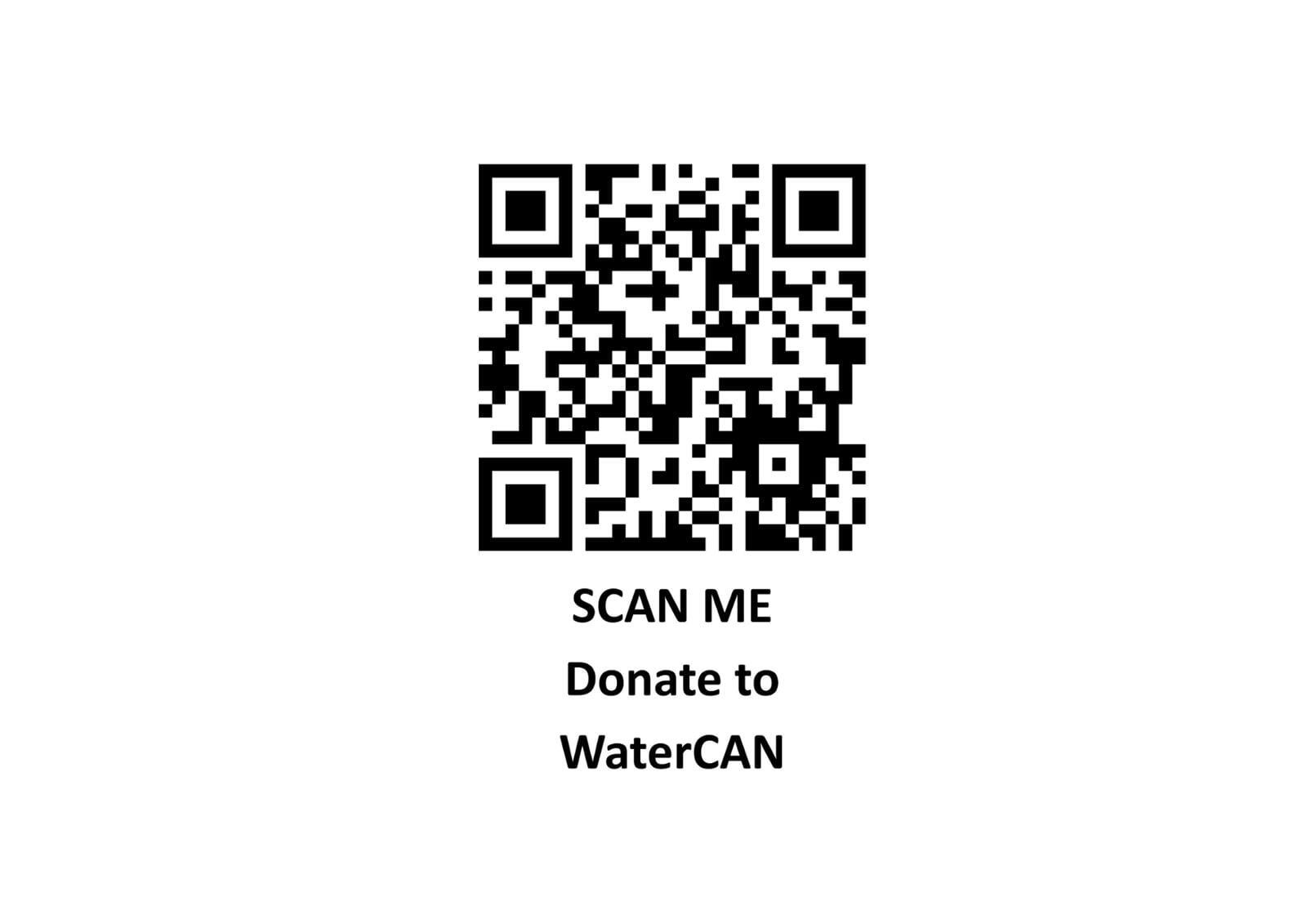
Donate to WaterCAN
Across South Africa, WaterCAN’s volunteers and citizen scientists are monitoring drinking water and sanitation failures, uncovering risks, and demanding action from those responsible. We challenge polluters, call out government negligence, and stand with communities whose rights to safe water and sanitation are routinely violated. Your support keeps this watchdog work alive and powerful.
For Media Enquiries please contact WaterCAN Communications Manager on Jonathan Erasmus 073 227 6075 or email media@watercan.org.za
