
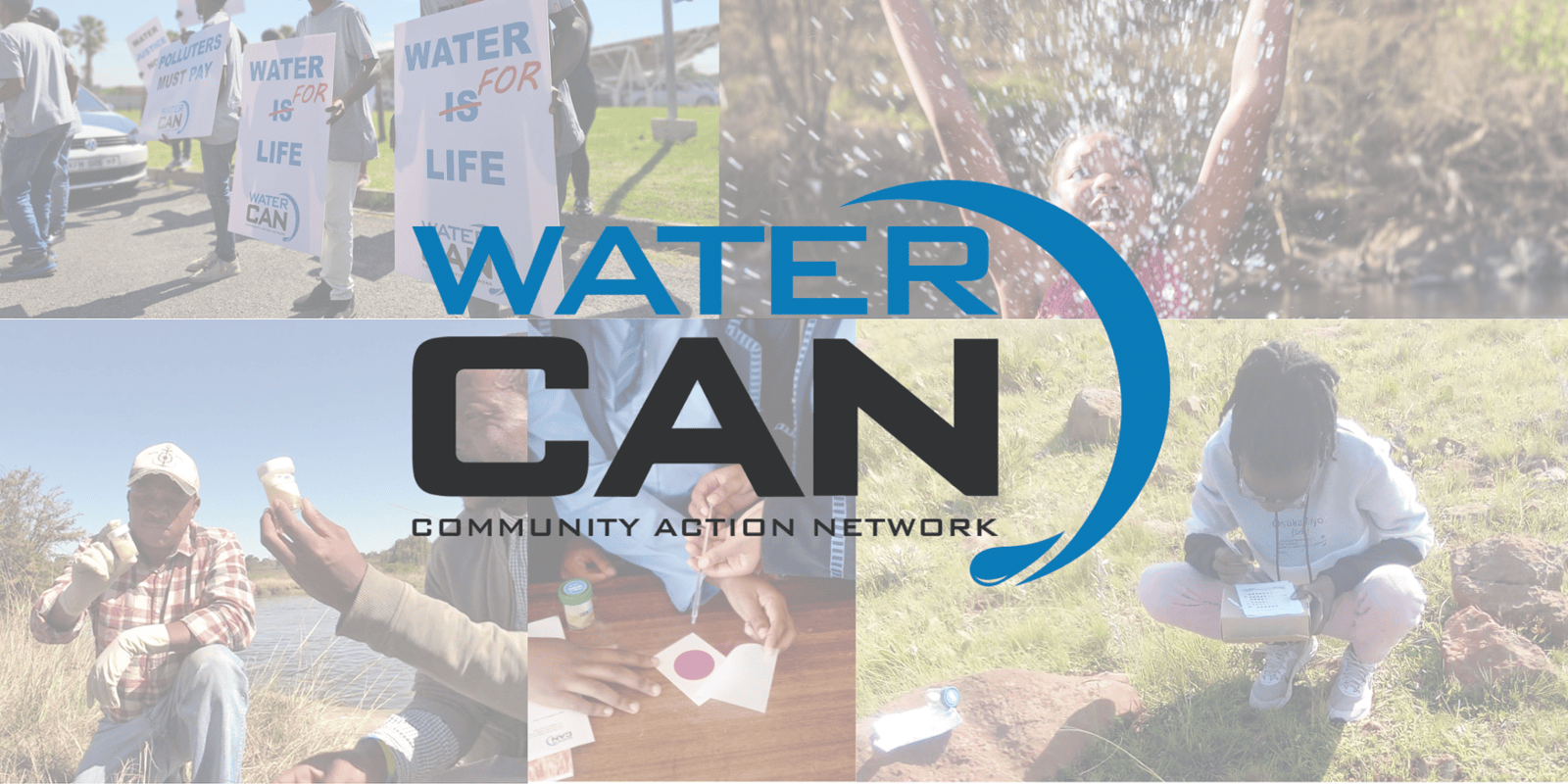
One year after becoming independent, WaterCAN says South Africa's worsening water crisis has confirmed that communities cannot wait for government alone to protect their constitutional right to safe water.
Since separating from the Organisation Undoing Tax Abuse (OUTA) on 9 July 2025, WaterCAN has grown as a national water justice organisation, using citizen science, advocacy and community organising to hold municipalities, water entities and government accountable.
Marking its fifth anniversary and first year of independence, WaterCAN says the crisis extends beyond failing infrastructure to failures of governance, accountability and public trust.
WaterCAN Chairperson Mark Heywood said South Africa needs organisations that turn public frustration into collective action. "WaterCAN is exactly the kind of organisation South Africa needs at this moment. At a time when public discourse is too often dominated by corruption, division and despair, WaterCAN is helping to build something different - informed, principled and solution-driven citizens who are prepared to defend both people and the environment."
Over the past year, WaterCAN has worked with communities, schools, civil society organisations, researchers and activists to generate independent water-quality evidence, expose pollution and service failures, strengthen public participation and advocate for reform.
"Communities are not powerless," said WaterCAN Executive Director Dr Ferrial Adam. "When people can test their own water, understand what the results mean and make that information public, they are no longer passive recipients of poor services. They become active defenders of one of our most fundamental constitutional rights.
"Citizen science changes the relationship between communities and the state. It transforms lived experience into credible evidence, and evidence into advocacy and action."
Building an independent water-quality database
Central to WaterCAN's work is Map My Water, its public citizen science platform where water-quality results are uploaded and displayed in real time. Following a major redevelopment, it now contains nearly 3 000 citizen-generated tests, making it one of South Africa's largest free, independent and publicly accessible community water-quality databases.
WaterCAN says communities are too often expected to accept assurances that water is safe while official results are delayed, inaccessible or poorly communicated.
"People have a right to know what is in their water," Adam said. "Every municipality should proactively publish its water-quality results in ways that are transparent, accessible and easy to understand. Until that happens, citizen science will continue to play a critical role in closing the information gap."
Turning evidence into accountability
During the year, WaterCAN made submissions to the South African Human Rights Commission's Gauteng water inquiry, engaged the Public Protector on water-related investigations, participated in municipal budget processes and scrutinised government performance reports, including the Blue Drop and Green Drop reports.
It also convened an anti-corruption roundtable with the Special Investigating Unit and Water Integrity Network. Representatives from government, civil society and business agreed that tackling corruption requires stronger public oversight, ethical procurement, protection for whistleblowers and sustained civic participation.
"Water insecurity is not simply an engineering problem," Adam said. "It is also a governance problem. When money intended for water and sanitation is diverted or mismanaged, infrastructure collapses. When wastewater treatment plants fail, rivers become polluted. When communities are denied information, trust breaks down. Clean water requires clean governance."
Growing water defenders
WaterCAN expanded its Schools Water Testing Programme, training learners to test drinking water and upload results to Map My Water. During its most recent Schools Water Testing Week, nearly 30% of samples collected at participating schools failed basic safety standards.
"Unlike municipal drinking-water systems, there is no consistent national approach to monitoring the quality of water that children drink every day at school," Adam said. "That should concern every parent, teacher, school governing body and education authority."
The year ahead
WaterCAN will focus on expanding Map My Water nationally, growing its network of trained citizen scientists, strengthening youth engagement and community organising, and pressing for greater transparency, stronger municipal accountability and an end to sewage pollution.
"The future of water security in South Africa cannot rest solely in government institutions," Adam said. "It also depends on informed, organised and active citizens who are prepared to participate, monitor, question and demand better.
"When communities can test, document, organise and speak with evidence, they do far more than protect water. They strengthen democracy itself."
Donate to WaterCAN
Across South Africa, WaterCAN’s volunteers and citizen scientists are monitoring drinking water and sanitation failures, uncovering risks, and demanding action from those responsible. We challenge polluters, call out government negligence, and stand with communities whose rights to safe water and sanitation are routinely violated. Your support keeps this watchdog work alive and powerful.
For Media Enquiries please contact WaterCAN Communications Manager on Jonathan Erasmus 073 227 6075 or email media@watercan.org.za
