
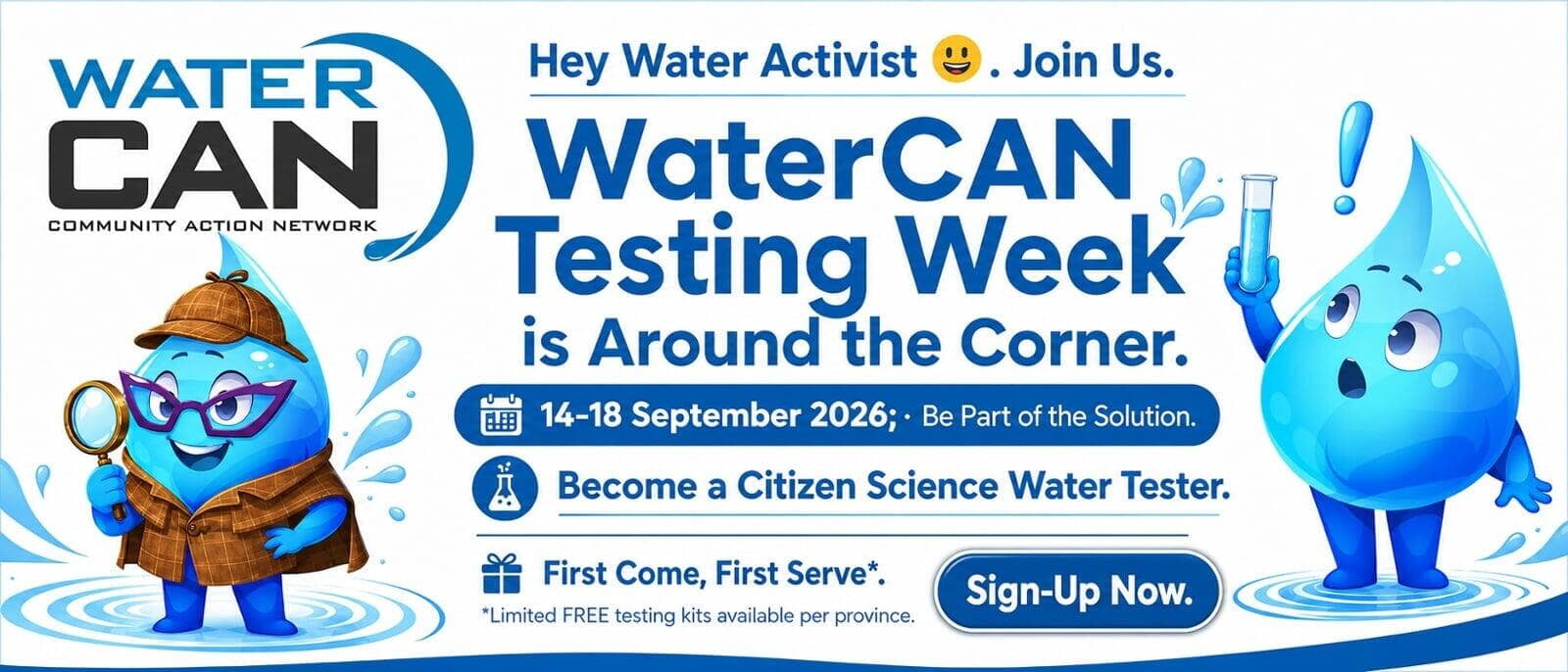
WaterCAN is calling on residents, schools, community organisations and water activists across South Africa to register for its annual Citizen Science Water Testing Week, which will take place from 14 to 18 September 2026.
Participants selected for the campaign will receive free citizen science water testing kits to test water sources in their communities and submit their findings to WaterCAN.
Registration closes on 31 August 2026.
A limited number of free testing kits is available in each province and will be allocated on a first-come, first-served basis.
WaterCAN Citizen Science and Training Coordinator Nomsa Daele said the campaign gives ordinary people a practical way to learn more about their local water sources and contribute to a wider understanding of water quality across the country.
“People should not have to simply assume that the water they drink or use every day is safe. Water Testing Week gives communities an opportunity to observe, test and document what is happening in their own environment,” said Daele.
“Every test contributes to a bigger national picture. When people collect information carefully and share their results, they are helping to identify possible risks and draw attention to areas that may require further investigation.”
Water Testing Week forms part of WaterCAN’s work to grow a national network of informed and active citizen scientists.
Participants will be guided on how to use the testing kits, record their observations and submit their results to WaterCAN’s citizen science platform.
At the centre of the campaign is WaterCAN’s MapMyWater platform, where participants upload their test results to a free, independent and publicly accessible database.
Each result adds another point to a growing national picture of water quality, allowing communities, researchers and civil society to identify recurring problems, compare conditions across areas and strengthen demands for action.
The true power of the database lies not in a single test, but in the patterns created when thousands of community-generated results are brought together. This turns individual observations into collective evidence that can expose risks, guide further investigation and help hold municipalities and water authorities accountable.
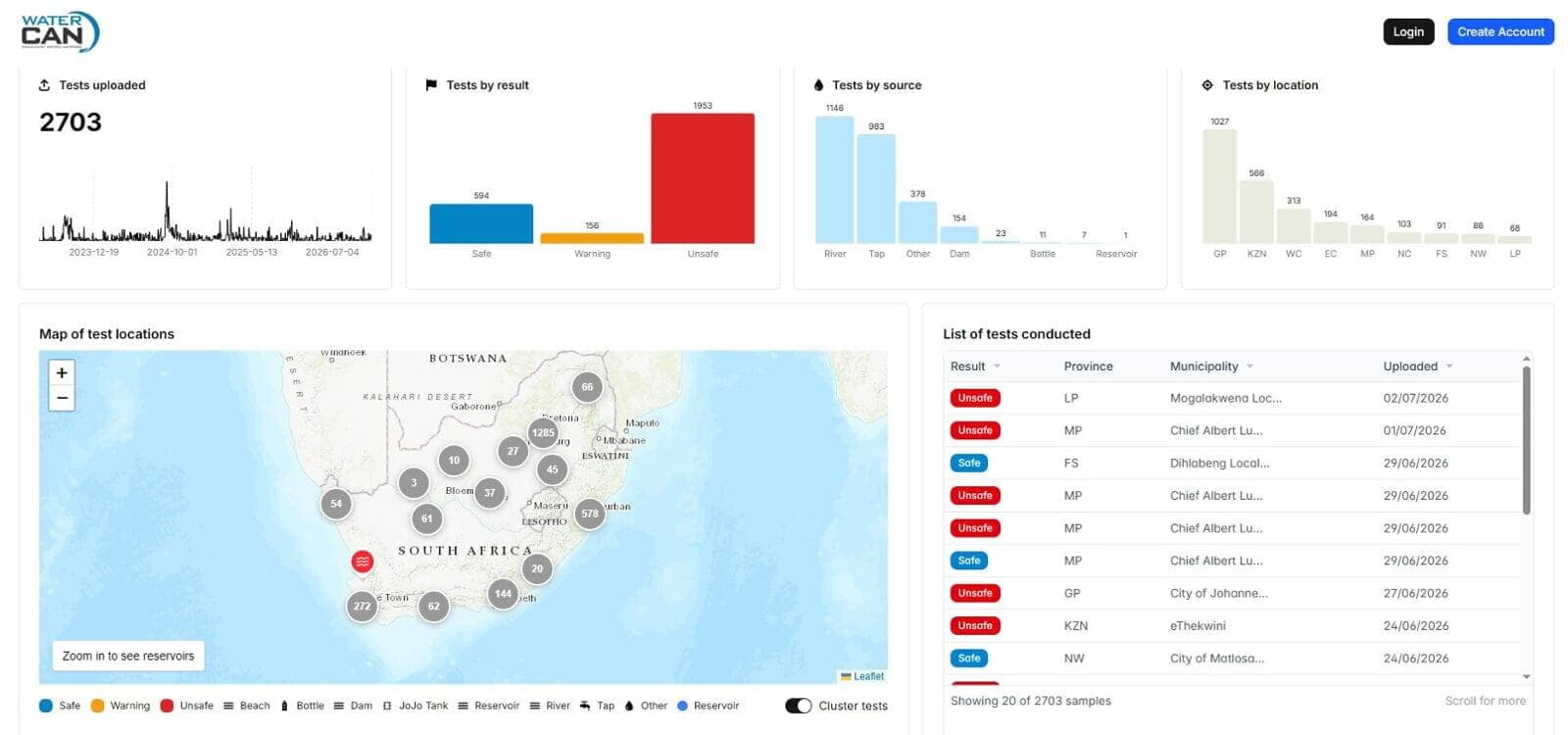
Every test adds to the picture. MapMyWater turns community water testing into public data that can reveal patterns, highlight risks and strengthen accountability.
The campaign will include testing of local water sources such as municipal taps, household water tanks, rivers and streams, depending on the circumstances in each participating community.
The kits provide basic indicator results and do not replace accredited laboratory testing or the legal responsibility of municipalities and water authorities to monitor and provide safe water.
However, Daele said citizen testing can provide an important early warning, help communities raise concerns using evidence and enable people affected by water outages or pollution to contribute to solutions.
“Citizen science is not a substitute for government doing its job. Municipalities and water authorities remain responsible for monitoring water quality and ensuring that people receive safe water,” said Daele.
“But citizen science helps democratise access to water information. It gives people affected by water outages, unsafe water or pollution the tools to monitor what is happening, contribute evidence and participate in finding solutions.
“It empowers communities to ask better questions, report concerns more clearly and demand an appropriate response when something appears to be wrong.”
South Africans continue to experience water outages, sewage pollution, deteriorating infrastructure and concerns about the quality of water supplied to homes, schools and communities.
WaterCAN believes communities must have access to credible and understandable information about the water they depend on, and must be able to participate meaningfully in decisions and solutions that affect them.
Results submitted during Water Testing Week will contribute to WaterCAN’s growing citizen-generated water-quality database and help identify patterns that may not be visible when incidents are viewed individually.
“One test may seem like a small action, but hundreds of tests conducted across the country can reveal patterns, highlight areas of concern and show where more detailed testing or intervention may be needed,” said Daele.
“This is how citizen science supports accountability. It turns community experiences into information that can be recorded, shared and acted upon.”
WaterCAN is encouraging interested participants to register as soon as possible because the number of free kits available in each province is limited.
Registering does not automatically guarantee that an applicant will receive a kit. Kits will be allocated on a first-come, first-served basis while provincial supplies remain available.
Donate to WaterCAN
Across South Africa, WaterCAN’s volunteers and citizen scientists are monitoring drinking water and sanitation failures, uncovering risks, and demanding action from those responsible. We challenge polluters, call out government negligence, and stand with communities whose rights to safe water and sanitation are routinely violated. Your support keeps this watchdog work alive and powerful.
For Media Enquiries please contact WaterCAN Communications Manager on Jonathan Erasmus 073 227 6075 or email media@watercan.org.za
