
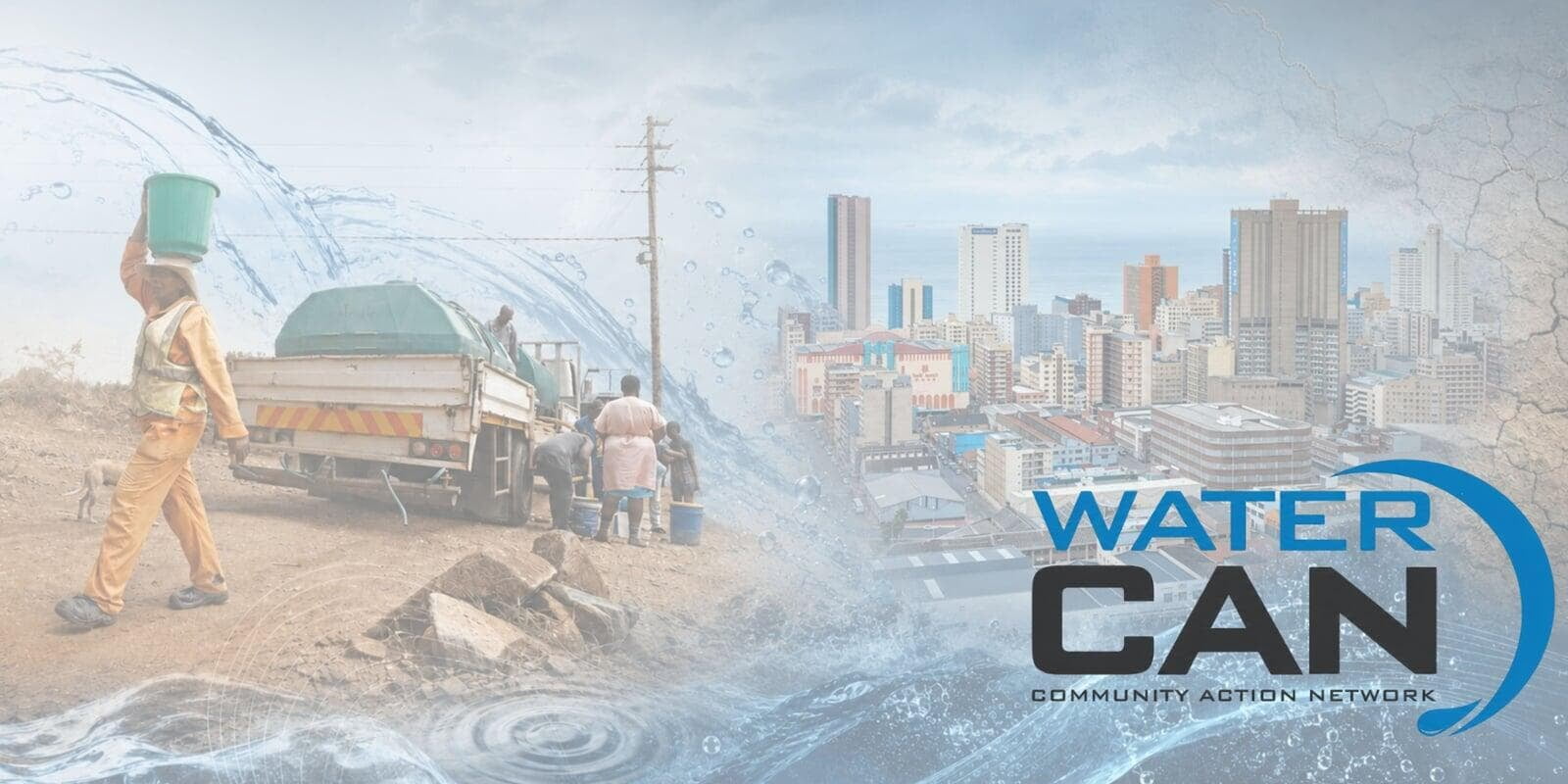
eThekwini Municipality’s disregard for regional water security has placed large swathes of KwaZulu-Natal at risk, and the city’s leadership should be held to account instead of ordinary residents, says WaterCAN.
The Department of Water and Sanitation has instructed the city that it can no longer continue to over-abstract water from regional water resources after granting it repeated concessions since 2023, warning that continued abstraction above licensed limits increased the risk of severe restrictions and potential system failure across the regional supply system.
Driving this crisis is the city’s inability to maintain and repair its water infrastructure, with non-revenue water at 55.6%, as well as its inability to resolve water faults due to shortages of plumbers, vehicles and critical resources. Delays in appointing external plumbing contractors have also constrained leak repairs and other non-revenue water interventions.
According to the department, unresolved water faults increased from 744 in November 2025 to 14,776 by May 2026, significantly undermining efforts to reduce water losses and demand.
This is all contained in a 9 September letter to eThekwini mayor Cyril Xaba from Water and Sanitation Minister Pemmy Majodina, in which she said the required reductions promised in August 2025 - a 1% reduction in water demand per month for eight months - were not achieved.
She warned that, if the city’s behaviour were allowed to continue, it would increase the risk of “severe restrictions and potential system failure to supply water”, with “serious consequences for water users and the regional economy”.
She added that there was no “reasonable basis to conclude that a further deferment would produce a different outcome”.
WaterCAN executive director Dr Ferrial Adam said that while WaterCAN supports the department’s action in principle, the communities most likely to suffer will be those living in informal settlements and poor and rural areas.
“The city’s inability to get its house in order is extremely dangerous for regional water security and could have a massive impact on our country’s objectives of equitable access to water for all.
“We have already witnessed a recent tragic death in eThekwini due to water scarcity and water tankering, and with the department effectively turning the taps off for the city even further, we are likely to see more unrest,” said Adam.
Adam said the department should go a step further and hold the leadership of the city’s water and sanitation department accountable for the “gross dereliction of duty”.
“It is deeply troubling that a city that is unable to fund repairs and maintenance of its water infrastructure still operates 318 water tankers and that 39% of the 111 wards in the city are almost entirely reliant on water tanker services to meet their water needs. Clearly there is money to purchase and operate tankering services. This irresponsible use of funds needs to be investigated and instead the money should be redirected to paying contractors to fix, repair and upgrade the city’s infrastructure instead,” said Adam.
Part of the department’s rationale was that, had it allowed the city to continue over-abstracting, this could have further increased the risk profile in the region in light of the predicted strong El Niño, which is expected to persist through the end of the 2026/27 summer season.
“Cities such as eThekwini must strive to become climate resilient, but instead we are seeing a city, as with many municipalities across the country, being completely unprepared for severe climate shocks.”
Adam said a high proportion of the city’s 27 wastewater treatment works are not functioning properly, adding to the crisis faced by residents.
“This is not a city facing minor staffing issues - this is a city in a state of severe collapse. If you cannot provide regular, potable water to the majority of taps across the city nor maintain your waste management services, you are in serious crisis and this cannot be allowed to continue,” said Adam.
WaterCAN demands that the following action be taken:
The city’s water and sanitation unit must be investigated by the Department of Water and Sanitation and/or other agencies such as the Auditor-General and the Special Investigating Unit.
The city must disclose all current and historical costs associated with municipal and privately operated water tanker services.
The Department of Water and Sanitation must take punitive action against the city’s responsible leadership and hold individuals accountable.
Donate to WaterCAN
Across South Africa, WaterCAN’s volunteers and citizen scientists are monitoring drinking water and sanitation failures, uncovering risks, and demanding action from those responsible. We challenge polluters, call out government negligence, and stand with communities whose rights to safe water and sanitation are routinely violated. Your support keeps this watchdog work alive and powerful.
For media enquiries please contact WaterCAN Communications Manager on Jonathan Erasmus 073 227 6075 or email media@watercan.org.za
