
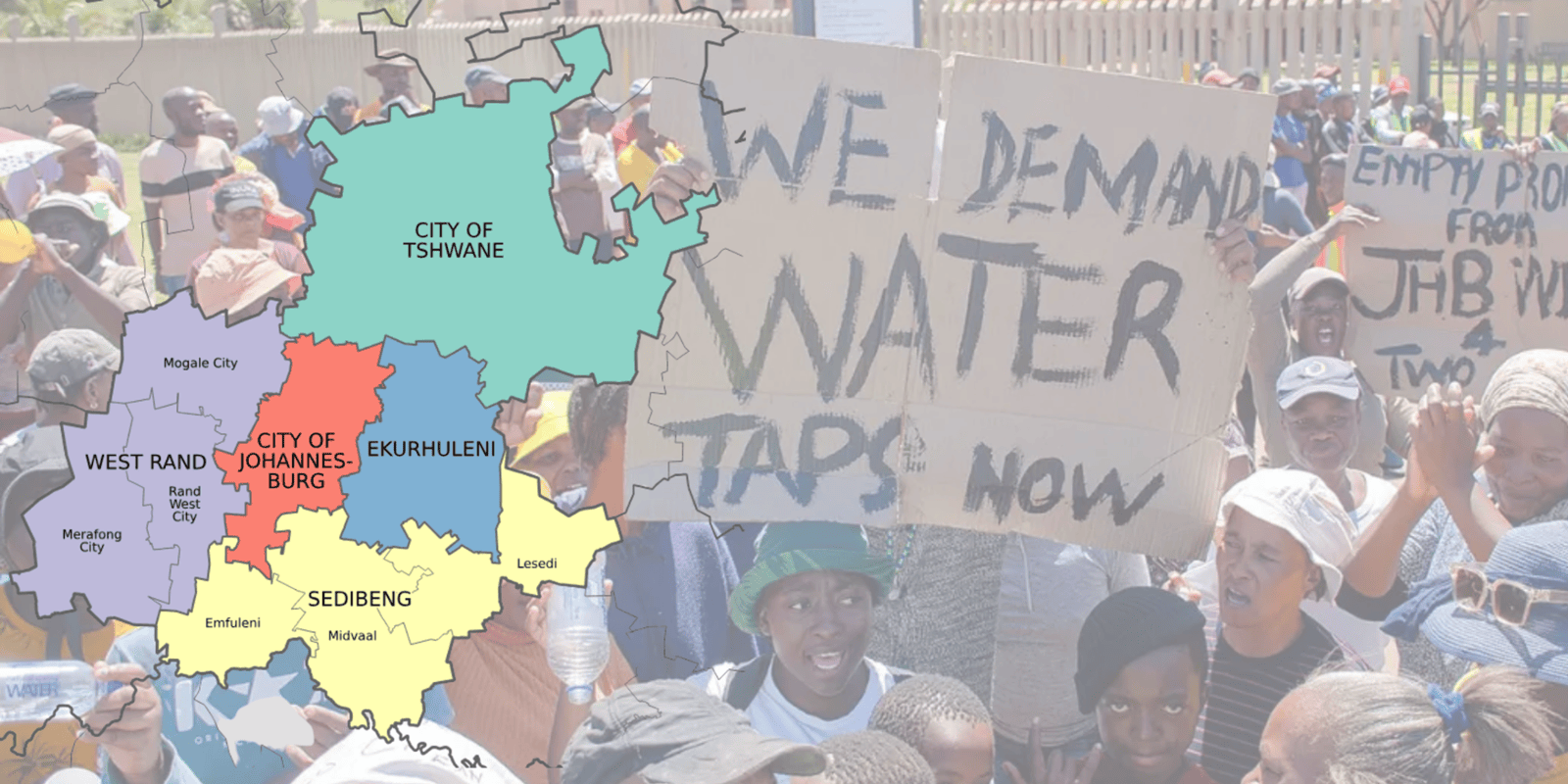
WaterCAN welcomes the coordinated intervention to address electricity failures disrupting Gauteng’s water supply but says this kind of intergovernmental approach is needed across the country to protect water infrastructure and prevent prolonged water outages.
A joint statement by the Department of Water and Sanitation, Gauteng government, Rand Water, Eskom, the City of Johannesburg and Emfuleni Local Municipality last week acknowledged that the problem is not insufficient electricity supply, but that municipal electricity distribution networks need better maintenance and strengthening.
Rand Water says that once its treatment and pumping facilities stop because of a power failure, it takes about six hours to return to full pumping capacity. Reservoirs must then recover, while depleted municipal reservoirs can take weeks to recover, particularly where storage and pumping capacity are inadequate.
Recent power interruptions affected the Eikenhof, Zwartkoppies and Vereeniging systems, disrupting water supplies across Johannesburg, Emfuleni, the West Rand and parts of North West.
WaterCAN executive director Dr Ferrial Adam said critical infrastructure cannot continue to be managed in isolation when the failure of one system can quickly cause another to collapse.
“We need to start treating the infrastructure that keeps our water systems running as critical infrastructure that must be maintained, protected and prioritised,” Adam said.
“The challenge is also the silos that exist within municipalities and between different spheres of government. In Johannesburg, for example, electricity and water are managed by separate entities, yet a failure in the electricity network can have an immediate impact on the water supply. The infrastructure is interconnected, so the response has to be integrated too.”
“This is also the kind of intergovernmental cooperation we need across the country, and not only when there is a crisis in Johannesburg. We need regular cooperation between the different institutions responsible for water and supporting infrastructure, backed by clear communication and transparency about the problems affecting water delivery and what is being done to fix them.”
WaterCAN welcomes the establishment of a joint technical working committee and weekly intergovernmental meetings involving the different institutions responsible for electricity and water infrastructure in Gauteng.
“Our water systems cross municipal boundaries and depend on electricity, treatment plants, pumping stations, reservoirs and municipal distribution networks all working together. Government institutions need to work together in the same way,” Adam said.
“Government has identified the problem and proposed solutions. It must now tell the public when those solutions will be in place.”
Adam said the Gauteng intervention should provide an opportunity to identify similar vulnerabilities in water supply systems elsewhere in the country before infrastructure failures result in prolonged disruptions.
“We need to protect the infrastructure that keeps water flowing before it fails. That requires proper maintenance, investment, cooperation between government institutions and, most importantly, accountability.”
Donate to WaterCAN
Across South Africa, WaterCAN’s volunteers and citizen scientists are monitoring drinking water and sanitation failures, uncovering risks, and demanding action from those responsible. We challenge polluters, call out government negligence, and stand with communities whose rights to safe water and sanitation are routinely violated. Your support keeps this watchdog work alive and powerful.
For media enquiries please contact WaterCAN Communications Manager on Jonathan Erasmus 073 227 6075 or email media@watercan.org.za
